 |
 |
 |
|
|
|
|
|
|
Izaberite vaš jezik


|
|
|
|
|
|
|
|
|
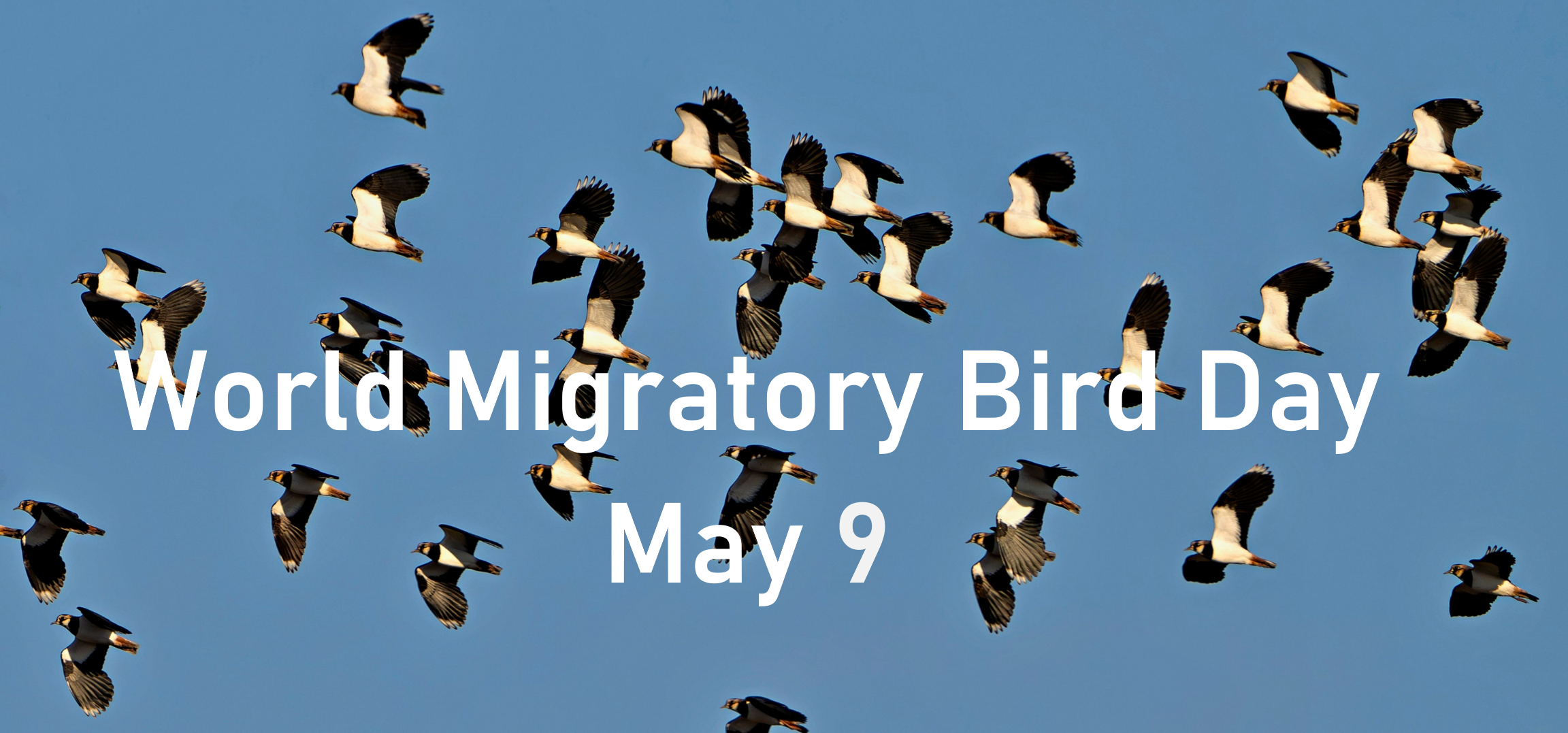
“Every Bird Counts – Your Observations Matter!” is a theme of this year’s World Migratory Bird Day, celebrated on May 9th, highlighting the crucial role of community and citizen science in tracking and protecting migratory species. Every year, more than 1.5 bilion birds migrate through African-Eurasian flyways to nest and raise offspring. While autumn bird migration proceeds gradually, with birds moving primarily in search of food, in the spring—when birds breed—hormones take precedence over food, which is why this migration is shorter and more energy-intensive. Thanks to bird ringing and modern technology, we continously learn more about the fascinating journey of migratory birds.
Birds migrating to and from Europe mainly use a few major international flyways – large, well-established routes that link breeding and wintering grounds across continents. A key migratory route for birds flying from Central/Northern Europe and Siberia to Africa is the Central European Flyway, often reffered to as the Adriatic Flyway. Birds migrate this flyway through the Danube basin and surrounding regions, since the Danube River serves as one of the most important migration corridor in Europe.
In the recent decades, Europe lost roughly 15 – 25 % of its bird population, with farmland species being the most vulnerable. Trends demonstrate a major decline in biodiverstiy in Europe, caused by anthropogenic pressures, such as agricultural intensification, usage of pesticides and fertilisers, habitat loss, fragmentation, degradation, and climate change. Unnatural barriers for birds like above-grounded power lines cause millions of bird deaths in Europe each year. Reducing the risks of collisions with power lines and electrocution in the Danube basin area is the main purpose of the international LIFE Danube Free Sky project, co-funded by the European Union and the Ministry of Environment of the Slovak Republic. Since 2020, 15 partners from 7 countries implement the project activities in 25 Special Protection Areas and 9 Important Bird Areas.
Power lines pose a danger to birds in two main ways:
- Nearly invisible power lines for birds can cause during their flight a significant risk of collisions. Especially endangered are larger species with poor maneuverability, such as cranes, bustards, pelicans or swans. The later a bird notices an obstacle such as a wire, the less chance it has of avoiding it. Species that fly in flocks and cross power lines are therefore also at risk; individuals in the middle or at the end of the flock are particularly vulnerable. The solutions consist of specially developed components – bird flight diverters - which are installed directly on high-risk power lines. Within the LIFE Danube Free Sky project, energy companies with cooperation of national parks and environmental organizations installed flight diverters on more than 265 kilometers of risky power lines.
- A second threat comes from utility poles, which birds use to rest or hunt prey, as they offer a good vantage point. A bird can be electrocuted mostly if it’s wings or a wing and a leg come into contact with two wires on a pole or a wire and metal cross-arm while landing or taking off. The consequences are fatal in the vast majority of cases. The most endangered species are larger birds of prey, such as eagles, buzzards, and larger falcons (e.g., the saker falcon). The solution involves insulating hazardous poles and installing specially modified consoles that minimize the risk of electrocution. As part of the mitigation measures implemented within the LIFE Danube Free Sky project, more than 4460 utility poles have been insulated so that birds can perch on them more safely.
Title photo: Jozef Chavko, migration of northern lapwings
_____________________________________________________________________________________________________________________________________________________________________
Data Collection at Scale – Volunteers can gather information across vast areas and in places professionals can’t always reach. This large-scale participation is critical for understanding biodiversity and tracking environmental change.
Community and Citizen Scientists Matter – Your observations matter. Whether you are recording information about the birds that are present where you live, the vegetation that they use, or other aspects of their life cycles, such as the quantity of plastics in the places where they are found.
Tools That Make It Easy - Technology is at your finger tips – Apps like eBird, BirdNET, Merlin Bird ID, iNaturalist and Tan inspire curiosity, joy, and a sense of connection to your local environment. Ornitho, BirdTrack, and BirdLasser make identification and data sharing simple. Gateway to Nature – Using these tools not only aids research but reconnects people with the joy of birdwatching and nature.
Ethics and Quality Matter Be a Good Birder – Follow ethical birding practices to protect birds, minimize disturbance, and make sure your data remains reliable. Quality Data for Policy – High-quality, verified data is essential for decisions at the local, national, and flyway scale.
Source and for more information visit: https://www.worldmigratorybirdday.org/.
More information about the decline in bird population can be found HERE.
 |
 |
 |
 |
 |
 |
 |
 |
 |
 |
 |
 |
 |
 |
 |

The LIFE DANUBE FREE SKY project has received funding from the LIFE Programme of the European Union. More info.

The LIFE DANUBE FREE SKY project is part of nature conservation and biodiversity projects in Natura 2000. More info.

The LIFE Danube Free Sky project is co-financed by the Ministry of Environment of the Slovak Republic.
 |
 |
 |
Email: [email protected]